



Disney has named its parks chief Josh D’Amaro to succeed Bob Iger as the entertainment giant’s top executive.
D’Amaro will become the ninth CEO in the more than 100-year-old company’s history. He has overseen the company’s theme parks, cruises and resorts since 2020. The so-called experiences division has been a substantial money maker for Disney, with $36 billion US in annual revenue in fiscal 2025 and 185,000 employees worldwide.
The 54-year-old takes over a time when Disney is flush with box office hits like Zootopia 2 and Avatar: Fire and Ash and its streaming business is strong. But Disney and other legacy studios are stumbling through a precarious time for Hollywood. The rise of generative AI, consolidation of streaming and producing giants, and the perceived interference from the U.S. government in the workings of entertainment companies has mired the industry in confusion.
The decision on the next chief executive at Disney comes almost four years after the company’s choice to replace Iger went disastrously, forcing him back into the job.
Only two years after stepping down as CEO, Iger returned in 2022 after a period of clashes, missteps and a weakening financial performance under his hand-picked successor, Bob Chapek.
This time, Disney sought out its next CEO meticulously. The company created a succession planning committee in 2023, but the search began in earnest in 2024 when it enlisted Gorman, who previously served as Morgan Stanley’s executive chair, to lead the effort. That still gave it ample opportunity to vet candidates, as Iger agreed to a contract extension.
Disney said that Iger will continue to serve as a senior advisor and board member until his retirement from the company at the end of the year.
Mergers, meddling and money
The change also comes amid a period of turmoil and scrutiny for the company. Iger, who once considered running for U.S. president against Donald Trump, saw his company highlighted in headlines late last year. As the parent company of ABC, Disney was widely criticized for deciding to pull Jimmy Kimmel Live! after host Kimmel claimed on-air that the accused shooter of conservative pundit Charlie Kirk — who was killed in September 2025 — was a member of the “MAGA gang.”
Kimmel’s comments drew the ire of U.S. Federal Communications Commission (FCC) head Brendan Carr, as well as station owners Nexstar and Sinclair Broadcast Group. The two companies — which collectively control roughly one-quarter of ABC affiliates in the United States — decided to stop airing the show on their channels, before Disney summarily pulled it from the airwaves.
The impasse raised serious questions about whether the Trump administration had positioned itself to influence entertainment companies. Kimmel’s on-air comments, which were directed toward “the MAGA gang,” were widely seen as critical of Republicans.
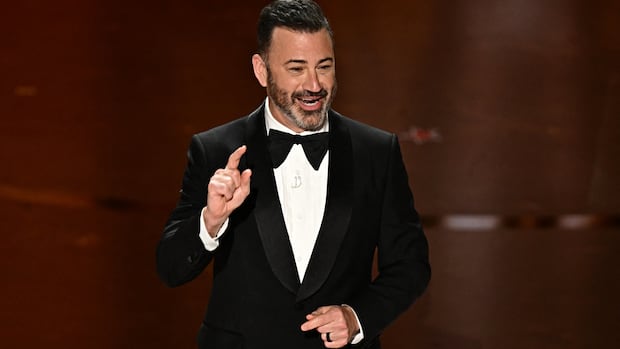
U.S. President Donald Trump cheered ABC’s suspension of Jimmy Kimmel Live!, igniting a debate over free speech and whether the White House is using its power to silence critics.
Then and now, Nexstar was in the process of acquiring media company Tegna. That merger would grant it an outsized control over American airwaves, thus requiring FCC approval. Sinclair has since urged the regulator to approve that deal, claiming the future of the local broadcasting industry depends on it.
Earlier, Paramount came under fire for its decision to pay $16 million US in a settlement with Trump over an interview with his Democratic rival Kamala Harris on the show 60 Minutes. Critics lambasted the settlement as a veiled attempt to ensure the company’s $8-billion US merger with Skydance was approved.
Meanwhile, its perceived closeness with the White House has raised alarm bells over editorial independence, should it be successful in its hostile takeover bid of Warner Bros.
Disney’s ABC News similarly settled a defamation lawsuit with Trump in late 2024, donating a reported $15 million US to his presidential library. And during the Kimmel fallout, Disney also needed government approval for its own acquisitions, such as its subsidiary ESPN’s recently closed mega-deal with the NFL.
The decision to pull Kimmel’s show came after Carr stated on a podcast that the FCC “can do this the easy way or the hard way,” in terms of how the commission would deal with the situation. Trump suggested that TV networks that cover him negatively could have their licenses revoked, while also posting online that the move to take Jimmy Kimmel Live! off the air was “great news for America.”
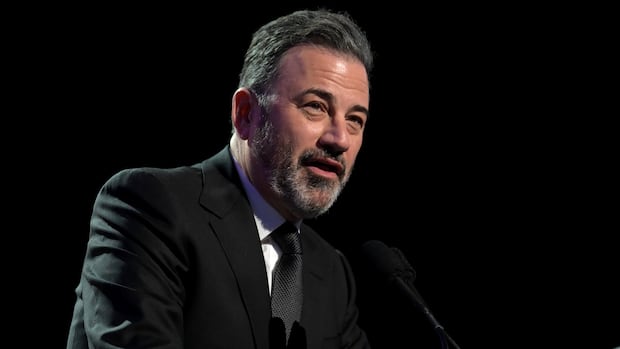
Disney says it will reinstate Jimmy Kimmel Live! after the late-night talk show was suspended last week for remarks host Jimmy Kimmel made about the reaction to Charlie Kirk’s assassination.
Ex-Disney CEO Michael Eisner called those threats “aggressive yet hollow.” Still, the fallout — aimed largely at Disney’s perceived truckling to Trump — was swift. Kimmel’s fellow talk show hosts, as well as other industry figures, lambasted the move, at times on their own shows.
Comedian John Oliver addressed a monologue directly to Iger on his own show, saying that the “cowards” who bent to Trump’s will would be remembered negatively by history. Musician Sarah McLachlan subsequently cancelled a performance at the premiere for her Disney+-hosted documentary Lilith Fair: Building a Mystery “in support of free speech.” When Kimmel was brought back on the air, she performed on its opening episode.
And — alongside protests and numerous calls for a boycott against Disney from the public — a group of shareholders later sent a letter demanding materials related to Iger’s decision to suspend Kimmel’s show.
In that letter, they claimed the company’s stock had plummeted “amid fears of brand damage and concerns that Disney was complicit in succumbing to the government overreach and media censorship.”
External, internal candidates
While external candidates for Iger’s replacement were considered, it was widely expected that Disney would look internally for the next CEO. The advantage would be that Iger had already been mentoring Disney executives, and that they would have had extensive contact with the company’s 15 board members, which includes Iger himself.
Disney is unique in that its top executive must oversee a sprawling entertainment company with branches reaching in every direction, while also serving as an unusually public figure.
D’Amaro and Disney Entertainmentco-chair Dana Walden quickly emerged as the front runners for the top job.
D’Amaro, who has been with Disney since 1998, has been leading the charge on Disney’s multiyear $60-billion US investment into its cruise ships, resorts and theme parks. He also oversees Walt Disney Imagineering, which handles the design and development of the company’s theme parks, resorts, cruise ships, and immersive experiences worldwide. D’Amaro has been leading Disney’s licensing business, which includes its partnership with Epic Games.
Meanwhile, Walden, i her most recent role as co-chair of Disney Entertainment, has helped oversee Disney’s streaming business, along with its entertainment media, news and content divisions. She joined Disney in 2019. Before that, she spent 25 years at 21st Century Fox and was CEO of Fox Television Group.
Walden will now step into the newly created role of chief creative officer of the Walt Disney Co. She will report to D’Amaro.
There had been speculation that Disney might go the route of naming co-CEOs, a move that has started to become more popular with companies including Oracle and Spotify.
D’Amaro and Walden’s appointments are effective March 18.
