


Listen to this article
Estimated 5 minutes
The audio version of this article is generated by AI-based technology. Mispronunciations can occur. We are working with our partners to continually review and improve the results.
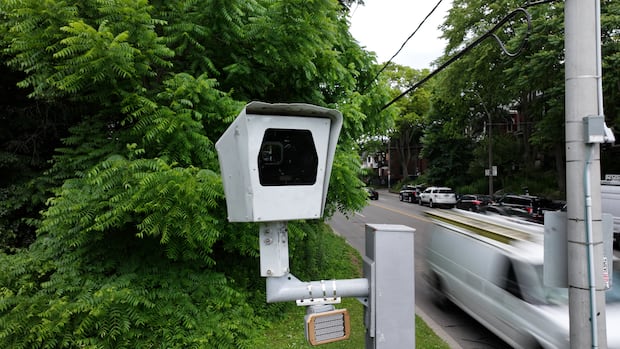
In a new report Mayor Olivia Chow describes as “horrifying,” Toronto transportation staff say there has been a significant increase in speeding where cameras used to be located in the city.
Looking at sites across the city where automated speed enforcement cameras used to sit, staff say the average percentage of vehicles going 11 km/h or more over the speed limit has gone from two per cent to 8.1 per cent.
The report examined vehicle speeds from before November 2025, when Premier Doug Ford’s government removed the cameras for being a so-called “cash grab,” to speeds in the later fall of last year and spring of 2026. Ford’s move to remove the cameras — despite studies, municipal data and police testimony supporting the tools — came after 16 speed cameras were mysteriously vandalized in one night last fall.
Staff looked at 104 locations across the city where speed cameras once ticketed drivers who went over the 30, 40 and 50-km/h posted limit. The report, which was prepared for Wednesday’s council meeting, notes that results vary widely from site to site.
“I’ve said many times, speed kills,” Chow said to reporters before Wednesday’s council meeting. “Bring back the speed cameras, this is inexcusable. We now have data,” she said.

Premier Doug Ford is scrapping speed cameras, starting today, after he spent weeks calling them a ‘cash grab’ over the revenue they generate. He is now earmarking $210 million for municipalities to instead implement traffic-calming measures. The CBC’s Angie Seth and director of U of T’s Infrastructure Institute, Matti Siemiatycki, share more on this story.
The two largest percentage increases in speeders include those going 16 km/h over the limit in a 30 zone and those going 16 km/h over the limit in a 50 zone.
In the 30 zones, the percentage of those speeders went from 1.4 per cent of drivers with speed cameras in operation to 7.2 per cent after they were removed. In 50 zones, the number went from 0.5 per cent to 2.9 per cent.
Toronto had 150 automated speed cameras before the provincial legislation came into force and had plans to add more, placed near school zones and other areas of concern for pedestrian safety.
Minister calls speed bumps more effective
The Ford government has suggested a better alternative would be infrastructure like speed bumps, roundabouts, raised crosswalks and curb extensions. But a city staff report from February said it would take Toronto 13 years at the cost of $52 million to install such infrastructure on roads that fall within school zones.
Transportation Minister Prabmeet Sarkaria responded to the city’s report at his own news conference Wednesday morning, where he announced Ontario is raising the speed limit on some highways. Sarkaria reiterated his government’s messaging about infrastructure.
“One hundred per cent of the time, if you have a speed bump there, you will not be able to speed,” he said.
But the city report from February also noted that there are 244 kilometres of arterial roads in school zones in Toronto, which would not be suitable for speed bumps because of the speed of their traffic.
Speeding increase in line with what researchers expected
As the debate around speed cameras heated up throughout 2025, one of the most frequently cited pieces of evidence to support them was a July 2025 study led by SickKids hospital. The study found cameras have reduced the proportion of speeding vehicles in urban school zones by 45 per cent.
Alison Macpherson, a York University professor in the school of kinesiology and health science who worked on the study, said the city’s data makes sense.
“It’s quite disappointing actually, but not surprising,” she said.
A new study by SickKids hospital shows speed cameras make the streets safer for kids. The hospital’s head of orthopedic surgery, Andrew Howard, spoke to CBC’s Metro Morning about the study findings and how they can improve kids’ safety.
Macpherson said speeding not only makes a driver’s stopping distance longer but also increases the severity of an impact when the car hits something or someone.
The city’s report says someone hit by a car going 40 km/h has a 70 per cent chance in surviving, while someone hit by a car going 60 km/h has a five per cent chance.
“That’s one of the reasons why we focus so much on speed, because it is associated both with more crashes and with worse outcomes of those crashes,” Macpherson said.
The report also notes that the changes in driver behaviour persist beyond simply the locations where cameras were removed and subsequent study was done.
Jess Spieker, an advocate with Friends and Families for Safe Streets, said she feels it when walking, biking and driving across Toronto.
“It really does seem to me like the message has been received that it’s OK to drive recklessly now that the consequence has been removed,” she said.
“It’s contributing to the sense of entitlement that motorists have, that they are not subject to any laws, and that they have a right to just do whatever they want,” she said.
