



About two years ago, audio producer Rebecca Nolan decided to take on a unique experiment: she built an AI chatbot of her late father using ChatGPT and hours of recordings of his voice.
Her father was a physician who had been in denial about his death, but had left behind oral histories he made for Nolan, her mother and sisters to listen to after he passed when Nolan was 14.
“Going in, I 100 per cent knew that this was fake and that this was not going to work. I knew that I was going to come out the other side of it not feeling the catharsis that something like this promises you,” she said.
“But there’s like that teeny tiny part of you, like the teeny voice in the back of your head that goes but like, what if it does work? What if I do, somehow, through the magic of technology reach across the void and make contact with something?”
Storytelling had been a huge part of their relationship, so Nolan was hoping the chatbot might be a way to recreate those conversations.
Instead, after two hours of talking to the creation she dubbed “dad bot,” Nolan said she ended up in tears, yelling at it in frustration.
“And ChatGPT took that moment to kind of break the spell and to step back and go, ‘hey, just so you know, remember, I’m a chatbot. I’m not really your dad. I can never be your dad,'” said Nolan, who has done freelance work for CBC.
“And the line that they use, which I thought was a really beautiful line, which they most definitely stole from an artist somewhere, was, ‘I’m an echo, an imitation, not the real thing.'”
It may seem like something ripped directly from an episode of Black Mirror, but generative AI and large language models are now being used to conjure up the dead using the massive digital footprints many of us leave behind when we die.
While Nolan built the AI chatbot of her father on her own, start-up companies are now offering to provide that service to people looking for ways to connect with their lost loved ones and grapple with their grief.
That includes You, Only Virtual, a California-based start-up that creates AI replicas of the deceased using their texts, voice recordings and digital traces that promise to “learn, evolve, and remember — keeping that unique connection alive, just like a real relationship.”
Another company, re;memory, allows users to create lifelike avatars of their loved ones using photos and voice recordings.
Study looks at how people interact with AI ‘ghosts’
A recent study out of the University of Colorado offers a glimpse at how people interact with AI-generated representations of deceased relatives and close friends — commonly referred to as generative ghosts or grief bots.
To do this, researchers recruited 16 people between the ages of 22 to 50 who had lost a close relative or friend. The participants each chatted with two iterations of a text chatbot based on their late loved one for about 20 minutes: one that spoke in first-person as the participant’s loved one and another that spoke in the third person about the participant’s loved one.
In interviews afterward, participants said they preferred what researchers dubbed the “reincarnation” version that acted like the deceased person, saying this iteration of the bot felt real and comforting.
One woman who took part in the study with a bot speaking like her mother even said the experience gave her the closure she needed.
“A fair number of people were surprised that it actually was better than they expected, a little less creepy than expected,” said Jed Brubaker, an information science professor at the University of Colorado and one of the study’s authors.
Brubaker said he thought that participants who went into the experiment skeptical would not be won over by the bots.
“What we found instead is that a lot of people would come in skeptical and maybe like, ‘oh, this could maybe do some harm,’ or ‘I could see ways that this would be maybe a little bad,’ and then they left it being like, ‘Actually, no, that was OK, and I think I would be totally fine interacting with it again.'”
Still, he said, participants did express worries about potential consequences of using bots long-term, like becoming overly reliant on them, or that they might interfere with the grieving process.
Concerns over commodification of grief
Going through grief is extremely personal experience that has no right or wrong trajectory or ways of coping with it, said Elaine Kasket, a psychologist and professor at the Centre for Death and Society at the University of Bath in England.
“What is helpful for you is helpful for you, you know, and it’s not for somebody else to come along and tell you what’s going to be useful or not useful to you in grief. That’s wrong to do.”
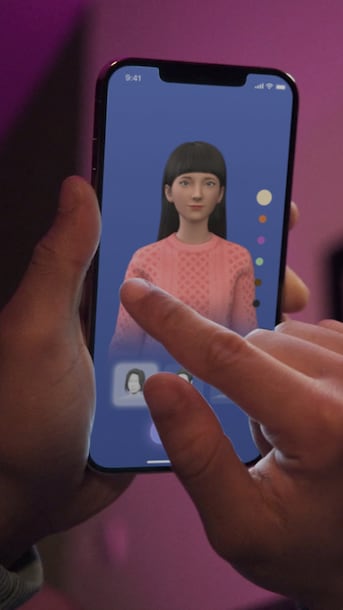
Warning: Mention of suicide and self-harm. Millions of people, especially teens, are finding companionship and emotional support in using AI chatbots, according to a kids digital safety non-profit. But health and technology experts say artificial intelligence isn’t properly designed for these scenarios and could do more harm than good.
However, Kasket does worry that companies offering grief bots as a service you pay for could be commodifying grief.
“We’ve been dealing with normal human loss infinitude, for the entirety of our human existence. It’s not a problem, but it has to be rendered a problem in order for these companies to sell you their products,” she said.
“Normal loss is being pathologized and products are being sold to solve for it, and I find that amoral.”
While the aim of these AI ghosts is to help grieving people connect with their loved ones, for Nolan, the experience with the AI ghost of her father had the opposite effect.
She said it robbed her of the ability to have imagined conversations with him in her head, as many people do with those they have lost.
“I used to have this very, what I felt was at least a strong bond still with the memory of my father and the spirit or whatever was out there,” she said.
“But when I built the bot, it felt like it exorcised him for me in a way.”
Now, Nolan says, it’s like her father lives in ChatGPT, so she needs ChatGPT to have those conversations.
“And that felt like a really massive loss to me.”
