August 25, 2026 Team Contributor
If you live in Ontario, there is a good chance Lake Ontario isn’t something you think about very often.
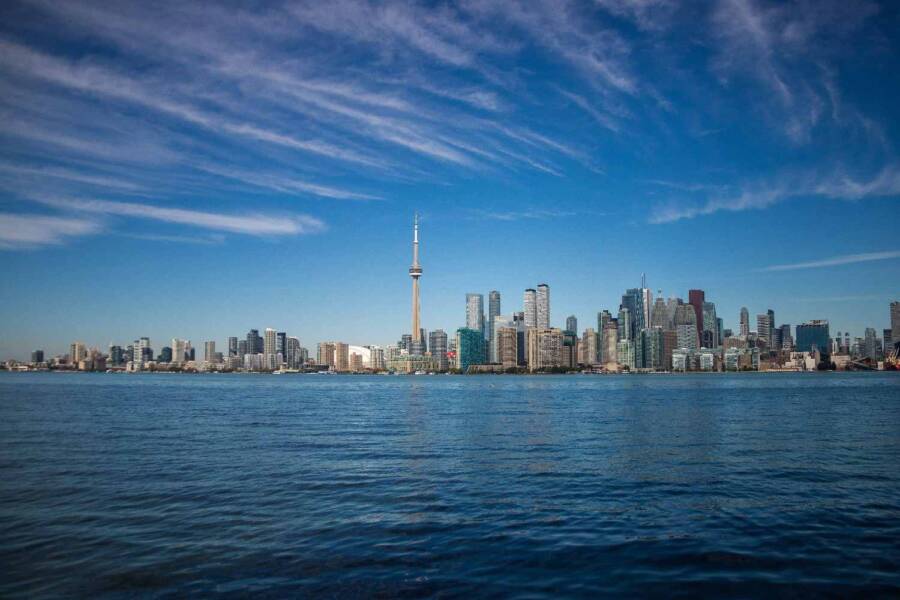
It is simply there, hemmed in the consciousness of every Canadian who lives in the city. Lake Ontario lingers there behind the Toronto skyline, beside the waterfront trails, beyond the beaches and harbours. It’s integral to the landscape that makes the province feel like home.
That is why Donald Trump’s latest proposal has landed differently in Canada.
The U.S. president said Tuesday that the United States is giving “serious consideration” to renaming Lake Ontario “Lake America,” linking the idea to the rapidly worsening trade relationship between Washington and Ontario.
For Canadians, the interesting part isn’t really whether a name on a map might change.
It is why this particular lake has suddenly become a political prop.
This isn’t an American lake with a Canadian view
Lake Ontario is a shared body of water. Its northern shore belongs to Ontario; its southern shore borders New York State. The international boundary actually runs through the lake.
And from the Canadian side, this isn’t some distant geographic feature.
Toronto sits directly on its shoreline. So do Hamilton, Kingston, Oshawa, Burlington, Mississauga and numerous smaller communities. For millions of Canadians, Lake Ontario is a major recreational destination.
Lake Ontario is also the easternmost of the five Great Lakes and the smallest by surface area, covering about 18,960 square kilometres. Its waters eventually flow through the St. Lawrence River toward the Atlantic.
That shared geography is what makes the proposed name change feel particularly provocative.
A name change wouldn’t change what Canadians call it
There is an important distinction here.
Trump has proposed or floated the name change. Canada has not suddenly renamed Lake Ontario.
Even the precedent he is following, the 2025 U.S. move to use “Gulf of America”, primarily affected U.S. federal usage. Other countries were not obliged to adopt the new name.
So Canadians travelling around Toronto’s waterfront, taking a ferry to the Toronto Islands or heading down to Niagara-on-the-Lake aren’t going to find a new body of water waiting for them.
There’s another remarkable connection that makes Lake Ontario much more than a name on a map: it has a namesake far beyond Earth. Ontario Lacus, a lake on Saturn’s moon Titan, was named after Lake Ontario because of the similarities in its shape and length.
Back home, the lake’s importance is much more tangible. Lake Ontario provides drinking water for roughly a quarter of Canada’s population, while its shoreline and surrounding watershed support recreation, communities and economic activity on both sides of the border.
Although it is the smallest of the Great Lakes, the Lake Ontario watershed is home to more Canadians than any other watershed in the country.
They’ll still be looking at Lake Ontario. That’s it.
And perhaps that is the most Canadian way to view this latest episode: the lake has been here long before today’s tariff fight, and it will remain here long after the political headlines have moved on.
For now, Lake America exists as a proposal and a headline making all the buzz.
And for Canadians, especially those who grew up with Lake Ontario as part of their everyday existence, nothing’s changing.
Related Post:
About the Author