March 23, 2026 Team Contibutor
It began, as so many mountain emergencies do, with a single moment of lost footing.
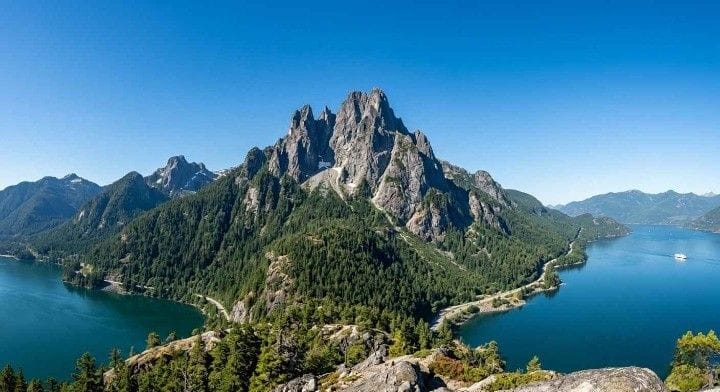
A group of 14 people in their 40s and 50s from different parts of Metro Vancouver, who met regularly for hikes, were descending from the summit of Brunswick Mountain on 22nd March near Lions Bay, B.C., around midday Saturday, when a woman slipped and fell between 10 and 30 metres down a steep, snow-covered slope. A tree eventually stopped her fall.
What followed made a serious situation critical. A second person in the hiking party attempted to climb down to her, but he also slipped and fell a significant distance, becoming seriously injured. He came to rest wedged in snowpack just above a steep rocky waterfall. “He basically got wedged… and it’s extraordinary, because you can see what is below, and he got very lucky in that sense,” said Maria Masiar, manager of Lions Bay Search and Rescue.
Two other members of the group, including the hike organiser, somehow reached both fallen hikers and stayed with them until rescue crews arrived. The remaining 10 descended on their own.
A highly technical BC search and rescue operation
North Shore Rescue described the operation as “a highly technical call involving critical injuries in very steep terrain.” Two helicopters and rope systems were deployed, with 19 volunteers from Lions Bay Search and Rescue and North Shore Rescue responding.
An emergency room doctor was among those lowered by rope to reach the critically injured man above the waterfall, providing advanced medical care on the mountainside before he was hoisted out. All four people — both who fell and the two who went to help were eventually extracted by helicopter.
The man was airlifted to a waiting ambulance at approximately 4:18 p.m. and remains in critical condition. The woman was treated for her injuries and hospitalised in stable condition.
The mountain was in full winter condition. The hikers were not equipped for it.
This is the part that every hiker heading into the BC backcountry in spring needs to sit with.
The snowpack on Brunswick Mountain was saturated from last week’s atmospheric river event, then froze overnight, forming crusty, icy layers before melting again in daylight. The upper sections of the mountain are exposed alpine terrain and, in current conditions, require full mountaineering crampons and ice axes. The hikers were wearing microspikes and using poles. Those who fell were not carrying equipment to arrest a fall.
Masiar urged anyone heading into the mountains to be prepared with appropriate equipment and be aware of current alpine conditions, noting it may be sunny and warm in the city while the mountains remain in full winter. Her specific instruction to hikers is that if someone in their group falls, do not attempt to climb down to them. Stay where you are and call for help immediately.
A pattern SAR teams know too well
This incident is not an outlier. Lions Bay Search and Rescue manager Martin Colwell said 2025 was “much worse” than previous years, with five sliding calls, serious injuries, and fatalities — including two deaths on North Shore mountains in spring alone.
North Shore Rescue search manager Dave Barnett confirmed that slips and falls on steep slopes have become the defining theme of spring rescues: “Those slips and falls resulted in people sliding or falling down very steep slopes with serious and tragic, unfortunate consequences.”
The chain-reaction pattern, in which a rescuer becomes a second victim, is among the most common and preventable escalations in mountain hiking accidents in BC.
Before your next trail, check conditions, carry proper gear, and know the difference between a spring day in Vancouver and a winter alpine environment. They are not the same mountain.
Related Post:
About the Author