April 9, 2026 Team Contibutor
In the evolving landscape of Indigenous tourism Quebec, one destination is quietly reshaping how travellers experience Canada. Nibiischii, a vast protected territory in northern Quebec, is not just another scenic escape; it represents a fundamental shift in who owns, manages, and benefits from tourism.
Spanning over 12,000 square kilometres, this region is fully managed by the Mistissini Cree Nation. That distinction alone sets it apart in a country where most parks still operate under federal or provincial control.
A new model for indigenous tourism Quebec
At the heart of Nibiischii’s appeal is its governance model.
Unlike traditional tourism frameworks, in which Indigenous communities are often consulted, Nibiischii is led entirely by the Mistissini Cree Nation. The land is managed through the Nibiischii Corporation, ensuring that decisions, storytelling, and economic benefits remain within the community.
This approach has earned recognition from the Indigenous Tourism Association of Canada through its “Original Original” accreditation—a marker of authentic Indigenous-led experiences rather than curated or performative tourism.
For travellers seeking sustainable travel in Canada, this distinction matters more than ever.
Recently, there has been renewed interest from the Canadian government to boost indigenous tourism. And it’s a welcome move.
The land of water
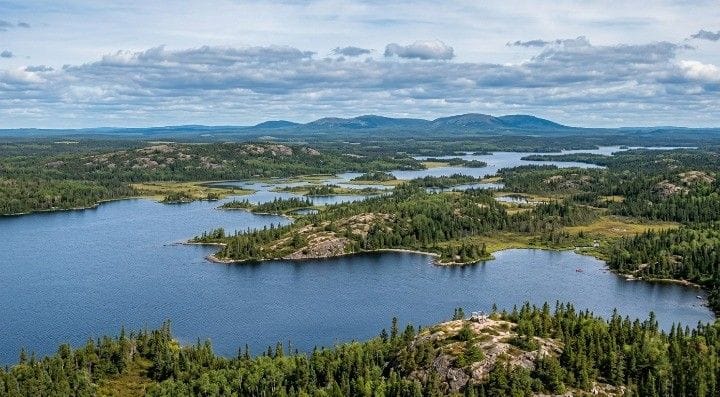
“Nibiischii” translates to “Land of Water,” and the name is no exaggeration.
The territory encompasses Lake Mistassini, the largest natural freshwater lake in Quebec, as well as Lake Albanel. The surrounding landscape stretches across boreal forest, taiga, and tundra—offering a rare ecological diversity.
It is also home to culturally significant sites like Wapushakamikw, or “White Hill,” a place of deep spiritual and archaeological importance to the Cree.
This combination of natural beauty and cultural depth makes it one of the most unique places in Quebec for travellers looking beyond conventional destinations.
Experiences that go beyond sightseeing
What truly drives interest in Nibiischii National Park is the nature of its experiences.
The region is emerging as a leading destination for dark sky tourism in Canada, thanks to minimal light pollution. Visitors can witness the Aurora Borealis and uninterrupted star fields—an increasingly rare experience in today’s world.
When you think of accommodation, it’s uniquely different here. Floating cabins on Lake Mistassini offer an immersive stay that blends comfort with nature, while traditional lodges provide access to guided experiences.
There’s more. Travellers can also participate in Cree-led workshops, from foraging and fishing to storytelling sessions. These are not staged attractions but lived cultural exchanges.
Why this matters for modern travellers
The rise of Indigenous tourism Quebec reflects a broader shift in traveller priorities.
Today’s travellers are actively seeking experiences that are:
- Authentic and community-led
- Environmentally responsible
- Economically beneficial to local populations
Nibiischii aligns with all three.
Through initiatives like the Shipeku programme, the region integrates traditional ecological knowledge with modern conservation practices. At the same time, tourism revenue directly supports the Cree economy.
Getting there
Reaching Nibiischii requires intention.
The gateway is the Mistissini Welcome Centre, located in northern Quebec. Travellers can either drive from Montreal (approximately 9 hours) or fly into Chibougamau, then take a shorter road transfer.
This relative remoteness is part of the appeal.
In a world dominated by over-tourism and crowded destinations, Nibiischii offers something increasingly rare: space, authenticity, and a genuine connection to place.
Related Post:
About the Author