



Toronto’s speed cameras may be gone, but this time there are no mysterious vandals wielding power tools, no blurry suspect photos and no police investigation.
As of the end of November, the cameras were taken down by the vendor who put them up for the city.
The removals end Premier Doug Ford’s crusade against the cameras, which he termed a “cash grab.”
Here’s how, in less than a year, the city went from doubling its number of speed cameras, to taking them all down at the premier’s behest.
On an early fall evening in 2021, Valdemar Avila, 71, and Fatima Avila, 69, were sitting in rush-hour traffic on Parkside Drive, the busy road next to High Park. The road had a speed limit of 50 km/h, but 38-year-old Artur Kotula was doing more than double that in his BMW.
The Burlington man drove his car into the back of the couple’s small Toyota, crumpling it like spare paper. Valdemar died there. His wife, the woman he moved to Canada with in the 1970s, died at the hospital.
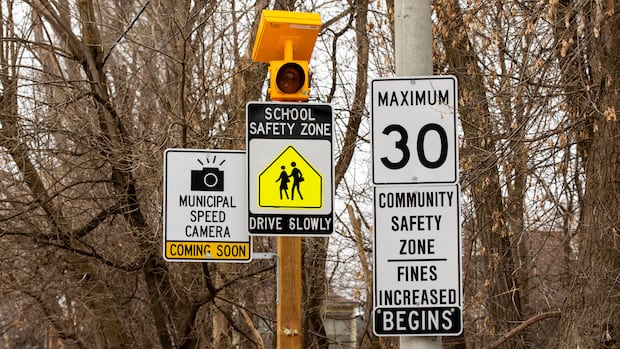
After the crash, the city lowered the speed limit to 40 km/h and installed a speed camera to ticket drivers. From April 2022 to March 2023, it issued 24,556 of them.
Kotula was sentenced to six and a half years in prison for the crash, which Superior Court Justice Suhail Akhtar called “a crime of stupidity.”
Premier Doug Ford is scrapping speed cameras, starting today, after he spent weeks calling them a ‘cash grab’ over the revenue they generate. He is now earmarking $210 million for municipalities to instead implement traffic-calming measures. The CBC’s Angie Seth and director of U of T’s Infrastructure Institute, Matti Siemiatycki, share more on this story.
But some wanted to keep driving as fast as they liked and the Parkside camera became a focus of frustration. In late December 2024, the camera was cut down, dragged through the mud and left, semi-submerged, in the High Park duck pond.
Throughout 2025, that vandalism spread from Parkside Drive throughout the city. On an early September night, 16 speed cameras were cut down in nearly every area of the city. The day after, those against the cameras gained a very powerful ally: Ford.
“Hopefully the cities will get rid of them,” Ford said on Sept. 9. “Or I’m going to help them get rid of them very shortly.”
Mayor Olivia Chow resisted the ban immediately, for months answering media questions about the latest developments with something that included “speed kills.”
But less than three months after Ford’s ultimatum, the city’s speed cameras were gone.
Report showed speed cameras’ effectiveness
A few months after the Parkside camera was first cut down, the city announced it was doubling its cameras from 75 to 150.
“If the cameras generated no revenue, that would be best because that would mean that people weren’t speeding,” said Barbara Gray, the now-retired general manager of the city’s transportation division.
But by the spring, the Parkside speed camera became a symbol of how some drivers felt about being asked to slow down. In April, it was cut down again — for the fourth time in five months.
Then, local politicians began speaking out against the cameras. In June, Toronto city councillor Anthony Perruzza unsuccessfully called for the speed camera program to be paused, calling them “speed traps.”
A new study by SickKids hospital shows speed cameras make the streets safer for kids. The hospital’s head of orthopedic surgery, Andrew Howard, spoke to CBC’s Metro Morning about the study findings and how they can improve kids’ safety.
In July, the case for speed cameras grew, with the release of a study led by researchers at the Hospital for Sick Children and Toronto Metropolitan University.
It looked at the effect of speed cameras in 250 Toronto school zones from July 2020 to December 2022.
“We had a very substantial reduction in the speed of the traffic, more than we were expecting to see,” said the study’s lead author, Dr. Andrew Howard, head of orthopedic surgery for the Hospital for Sick Children.
“And what was especially pleasing about that was that the faster the cars were going, the greater the reduction in speed.”
Cities, police, experts criticize ban
Despite the evidence, in September everything changed.
A few weeks after 16 speed cameras were cut down overnight and Ford issued his “get rid of them” ultimatum, he held a news conference. Standing in front of big flashing signs telling drivers to slow down, Ford said physical infrastructure like speed bumps do a better job — an assertion experts balked at, given where the speed cameras are.
“You can’t have people flying over speed bumps on major arterials,” Linda Rothman, one of the researchers behind the TMU study, said at an October school safety summit organized by the city to oppose the ban.
On Oct. 20, the province tabled Bill 56 — the legislation at would end speed camera programs.
City officials are pushing back against Doug Ford’s plan to remove speed cameras, gathering at a safety summit at City Hall with experts to make their case. Lane Harrison has more.
Chow tried to make concessions, like offering a grace period between the first and second ticket. Ontario’s big city mayors sent a letter to Ford in October, saying the ban would “reverse years of progress on safety in school zones.”
Those tasked with keeping the province’s roads safe, the Ontario Association of Chiefs of Police issued a statement.
“Employing ASE (automated speed enforcement) tools has been proven to reduce speeding, change driver behaviour, and make our roads safer for everyone — drivers, cyclists, pedestrians, and especially children and other vulnerable road users,” the OACP wrote.
But nothing changed.
Verra Mobility, the Arizona-based company who supplied Toronto’s cameras, recently announced in a news release that it’s in the process of exiting Ontario.
“While Verra Mobility respects the legislative process, it stands firmly behind the proven effectiveness of speed cameras in improving road safety.”
