



Listen to this article
Estimated 4 minutes
The audio version of this article is generated by AI-based technology. Mispronunciations can occur. We are working with our partners to continually review and improve the results.
Health professionals in B.C. are asking parents to be vigilant this respiratory season as ER and primary care centre visits for children surge across the province.
According to the B.C. Centre for Disease Control’s latest weekly summary, covering Nov. 30-Dec. 6, both cases of influenza and RSV are increasing among children.
While the rise in respiratory illness is expected at this time of year, doctors say what is concerning is an uptick in vaccine hesitancy.
Dr. Tom McLaughlin, a pediatrician at B.C. Women’s and Children’s Hospital, says hospitals are seeing more children come in with respiratory symptoms and many of them are unvaccinated.

Health officials are warning of a spike in influenza in younger populations.The B.C. Centre for Disease Control is reporting higher cases of influenza among children, which it says has led to an increase in hospital emergency visits. Our Dan Burritt is joined by Dr. Tom McLaughlin, a pediatrician at B.C. Women’s and Children’s Hospital.
“In the last few years, we are seeing an increase in people who are hesitant, who might have been exposed to misinformation about vaccines,” McLaughlin said, adding that it has been an issue since the pandemic.
He said vaccination remains one of the most effective ways to reduce the risk of severe illness and hospitalization.
“By being vaccinated, you are reducing your own and your children’s risk of both serious disease and all disease.”
In a statement last week, provincial health officer Dr. Bonnie Henry said that the predominant flu strain circulating in B.C. and in Canada is H3N2, a subtype of influenza A, which can cause more severe illness compared to other strains.

She noted that the current vaccine being offered is not the best match for this strain but emphasized that it still provides strong protection against severe illness and hospitalization.
Dr. Pascal Lavoie, a pediatrician and professor at the University of British Columbia, said infants and children with underlying health conditions, including premature babies and those with cardiac or immune disorders, are at higher risk of severe complications due to RSV.
RSV usually causes a minor cold, but can lead to severe illness in vulnerable groups like older adults and newborns.
A recent study from the University of British Columbia’s Faculty of Medicine found that babies under six months made up almost 45 per cent of all RSV-related hospital admissions in Canada.
RSV shots for infants necessary, health officials say
Influenza vaccines are recommended and free for everyone six months of age and older in the province, including pregnant women.
However, there are no RSV vaccines approved for infants in the province, says Lavoie although there are two key ways to protect babies.
One is a maternal RSV vaccine called Abrysvo, which can be given during pregnancy and provides protection to infants after birth. It was only recently approved for pregnant people aged 18 and older.
According to the province, the vaccine is not free and costs about $300.
“It works really well providing 70-80 per cent protection against RSV hospitalization in the infant,” Lavoie said.
He says for mothers who are unable to get vaccinated during pregnancy, monoclonal antibody treatments are available.
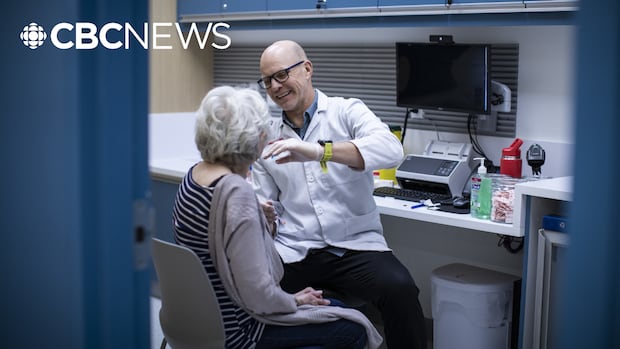
As flu season approaches, the province is unveiling its rollout for COVID-19 and flu vaccines. Health officials are encouraging people across B.C. to roll up their sleeves and get the shot. As Michelle Ghoussoub reports, they’re also warning of increasing misinformation about the safety of vaccines.
Unlike vaccines, which help the body make its own antibodies, monoclonal antibodies provide protection by directly transferring antibodies to the baby through an injection.
The province says monoclonal antibodies like Nirsevimab will not be available for most infants in B.C. this respiratory season and are reserved for some high-risk infants and those born in certain remote communities.
The majority of Canada has a publicly funded RSV program where all babies can receive Nirsevimab free of charge.
The only outliers are B.C., Alberta and New Brunswick.
Lavoie said broader use of such tools could prevent hundreds of hospitalizations each year.
“It’s estimated that 250-300 hospitalizations could be prevented in B.C. every year through this approach,” he said.
He says that for pregnant people who can’t access the RSV vaccines, breastfeeding can help protect infants.
“[It] helps transmit a lot of good antibodies to the infant that will protect the infant against a whole lot of respiratory viruses, not just RSV,” said Lavoie.
In Ontario, three children between the ages of five and nine have died from complications of influenza this month.
While no child deaths linked to flu or RSV have been reported in B.C., health officials say vaccination remains the strongest defence as respiratory illnesses continue to rise.
