



Listen to this article
Estimated 3 minutes
The audio version of this article is generated by AI-based technology. Mispronunciations can occur. We are working with our partners to continually review and improve the results.
Sean “Diddy” Combs’s lawyers are poised to try to persuade federal appeals court judges in a Thursday morning hearing that the hip-hop mogul was treated unfairly at the trial that sent him to prison on prostitution-related charges, and that the First Amendment should win him his freedom.
Combs, currently in federal prison in New Jersey, is challenging his conviction and more than four-year prison sentence. The musician and record producer won’t be present for Thursday morning’s arguments before a panel of three federal appellate judges.
His attorneys say Combs’s conviction should be reversed, or that he should at least be freed and re-sentenced to less time.
Prosecutors oppose the arguments.
In written arguments, Combs’s lawyers repeated claims they made before the trial judge, including an assertion that Combs’s films of sexual encounters between his girlfriends and male sex workers amounted to “amateur pornography” and was protected by the First Amendment.
The attorneys said the term “prostitution” should be interpreted narrowly to exclude what they portray as voyeuristic and expressive activity.
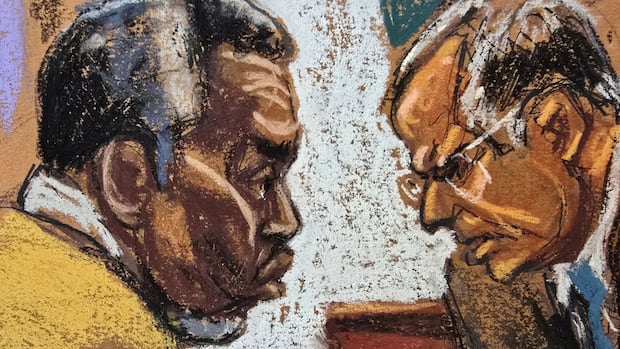
Sean (Diddy) Combs has been convicted of prostitution-related offences but acquitted of sex trafficking and racketeering conspiracy charges that could have put the hip hop mogul behind bars for life.
The lawyers also argue that Combs’s sentence was too harsh, saying the trial judge wrongly based it in part on a conclusion that the crimes involved fraud and coercion and that Combs was a leader or organizer of criminal activity. Combs was acquitted of sex trafficking and racketeering charges, which carried the potential for a life sentence.
He was convicted under the federal Mann Act, which bans transporting people across state lines for prostitution.
But federal prosecutors said in court papers that Combs’s recordings don’t make his case a free speech issue.
They said that if Combs was right in claiming that “creative,” “elaborate” and “highly staged” sex acts meant that they were protected by the First Amendment, then “brothels offering elaborate and staged scenes for individuals to have sex with women for payment could claim First Amendment protection.”
Prosecutors also said the initial sentence was proper.

Combs’s trial last year exposed the sordid private life of one of the most influential figures in music. The case featured harrowing testimony about violence, drugs and sexual performances that witnesses said he called “freak-offs” or “hotel nights.”
He did not testify, though he was present in court throughout the trial. His defence team acknowledged that he could be violent but argued that prosecutors were straining to make a federal crime out of his personal life.
Combs, 56, has been behind bars since his September 2024 arrest. The Federal Bureau of Prisons says he is scheduled for release in April 2028.
