February 16, 2026 Billy Walker
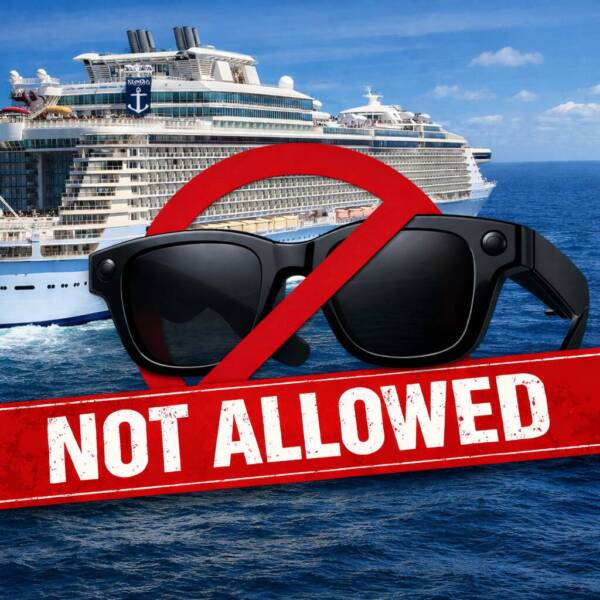
Royal Caribbean has updated its onboard policies, limiting where guests can use smart glasses with recording capabilities. As wearable technology like Ray-Ban Meta Smart Glasses, Snap Spectacles, and other camera-enabled eyewear become more common, the cruise line has drawn firmer boundaries around privacy at sea.
Where Smart Glasses Are Now Restricted
Royal Caribbean still allows guests to bring smart glasses onboard. However, passengers may not use recording-enabled glasses in:
- Public restrooms
- Youth program areas
- Medical facilities
- The casino
Ship security officers and the captain can confiscate devices if guests ignore the policy.
The company aims to prevent unauthorized recording in sensitive spaces where passengers expect privacy.
Why the Cruise Line Acted
Cruise ships create a uniquely shared environment. Thousands of guests interact in restaurants, pools, lounges, and activity areas. Families entrust cruise lines with their children. Medical centers operate under confidentiality standards.
Smart glasses change the equation. Unlike smartphones, which people visibly hold while recording, wearable devices can capture video and audio discreetly. That subtlety raises concerns about consent and privacy.
Royal Caribbean appears to have taken a proactive step. While the company has not cited a specific incident, the rapid rise of wearable recording devices has forced travel operators to rethink long-standing photography rules.
Wearable Tech Meets Shared Spaces
Devices like Ray-Ban Meta glasses allow users to record hands-free footage with minimal outward signs. Social media creators increasingly use these tools to document travel experiences in real time.
But cruise ships are not public sidewalks. They operate as controlled environments with expectations of safety and comfort. By restricting where smart glasses can record, Royal Caribbean signals that guest privacy outweighs novelty technology.
Guests who rely on prescription smart glasses should bring a non-recording backup pair for restricted zones.
A Broader Travel Trend
Royal Caribbean’s move reflects a larger shift across hospitality and entertainment. As wearable technology advances, airlines, cruise lines, and venues must balance innovation with privacy protection.
For cruisers, the message is simple: review the prohibited items list before sailing and understand where certain devices may not be used.
Technology continues to evolve quickly. Travel companies now face the challenge of keeping pace — while protecting the experience that guests experience.
Related Post:
About the Author