March 6, 2026 Team Contibutor
The phone alert arrived just after midnight. “A missile may be incoming — please find shelter immediately.” For Simon Marcotte, 33, from Quebec City, what had been a routine work trip to Dubai with his fiancée and her child became something unimaginable. The family rushed to their building’s basement, joining elderly neighbours sleeping on concrete floors. Outside, the sky over the Gulf flickered.
He is one of thousands of Canadians stranded in the Middle East since the US and Israel launched strikes on Iran on February 28, 2026, triggering a sweeping regional conflict. Flights vanished overnight. Sirens followed.
The Canadians in the Middle East
According to Global Affairs Canada (GAC), as of March 6, approximately 107,000 Canadians have registered their presence across the Middle East — a number officials acknowledge significantly under-represents the true total, since registration is voluntary.
The highest concentrations are in Lebanon (23,165) and the UAE (23,064), with Saudi Arabia, Qatar, and Egypt also hosting thousands more.
In Dubai alone, estimates put the Canadian community between 15,000 and 30,000 people. Of these, roughly 2,000 have formally requested government assistance to leave — a number that is rising daily as the conflict shows no sign of short-term resolution.
Dubai’s Airport- A Gateway That Went Dark
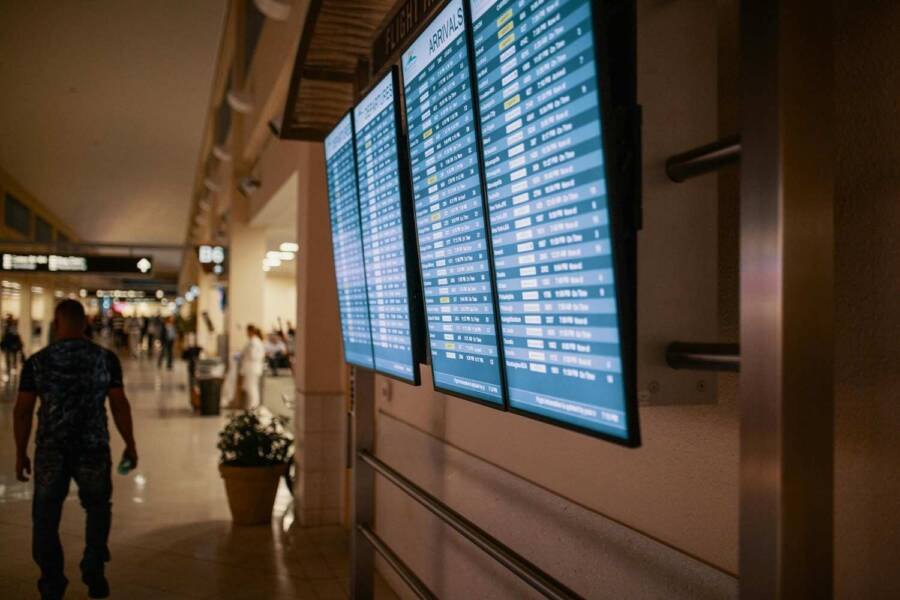
Dubai International, the world’s busiest international airport, has seen rolling closures since the strikes began. Devin Ramoutar, 27, of Toronto, arrived in Dubai on a family holiday and watched his return flight get cancelled six times in a row. He waited 48 hours before receiving even a generic email from Ottawa. “The situation is indefinite,” he told reporters. “Delay is not the word anymore.”
Across the Gulf, more than 21,300 flights have been cancelled since hostilities began, according to aviation data firm Flightradar24, with Middle East airspace closures forcing reroutes that add hours — or make travel impossible altogether.
What Canada Is Doing- Ottawa’s Five-Track Evacuation Plan
Foreign Affairs Minister Anita Anand confirmed this week that Ottawa has moved from a reactive stance to a structured, multi-route Canada evacuation from the Middle East. With commercial aviation in near-total collapse, the government has activated five parallel channels simultaneously — as confirmed by Global Affairs Canada and reported by CBC News:
• 200 seats reserved on Lebanon’s Middle East Airlines departing over the next three days, providing a critical lifeline for Canadians in Beirut.
• Qatar Airways buses for 200 Canadians — ground transportation from Doha to Saudi Arabia, where airports remain operational and international flights are departing.
• Israel is running buses to Egypt — a coordinated land corridor to the Egyptian border, where passengers can connect to functioning international airports.
• Charter flights from the UAE in the coming days — the federal government has signed contracts with charter carriers specifically targeting the large Canadian community in Dubai and Abu Dhabi.
• Reserved seats on commercial airlines from the UAE — Canada has secured block bookings on the limited commercial flights still operating out of Dubai International.
Australia and the UK have already begun formal evacuations, adding political pressure on Ottawa to accelerate. Canada’s evacuation of the Middle East is now being described by officials as an “indefinite” operation, with no clear end date in sight as the conflict continues.
The Roadblocks
- Airspace chaos: Unpredictable closures across the Gulf — UAE, Qatar, Bahrain — make it nearly impossible to guarantee flight paths, even for chartered aircraft.
- No diplomatic bridge to Iran: Canada has no embassy in Tehran. Over 3,000 registered Canadians in Iran must navigate land exits through Turkey, Armenia, or Azerbaijan, with minimal consular support.
- Consular backlog: Many families report waiting more than 48 hours for a first response from the Emergency Watch and Response Centre in Ottawa — a delay that, for people hearing sirens outside, can feel catastrophic.
- Trapped passports: A number of Canadians had their passports submitted to embassies for renewal or visa processing. With those documents held, crossing land borders into Saudi Arabia or Oman is simply not an option.
If Your Loved One Is Stranded-Get Help Now
Contact the Global Affairs Canada Emergency Watch and Response Centre, available 24 hours a day:
If your family member has not yet registered, urge them to do so immediately through the Registration of Canadians Abroad (ROCA) portal. It remains the government’s primary tool for locating and contacting citizens in crisis zones.
This article will be updated as new verified information becomes available. Situation as of March 6, 2026. Sources: Global Affairs Canada, CBC News, The Canadian Press, Al Jazeera, CNN.
Related Post:
About the Author