May 4, 2026 Team Contributor
Three people are dead, and one passenger is fighting for his life in a Johannesburg hospital. And 149 others remain stranded aboard a Netherlands-based cruise ship in the Atlantic, anchored off the coast of West Africa.
They cannot disembark and seem to be waiting for answers that have been slow to come. It is one of the most alarming health events to hit the cruise industry in years.
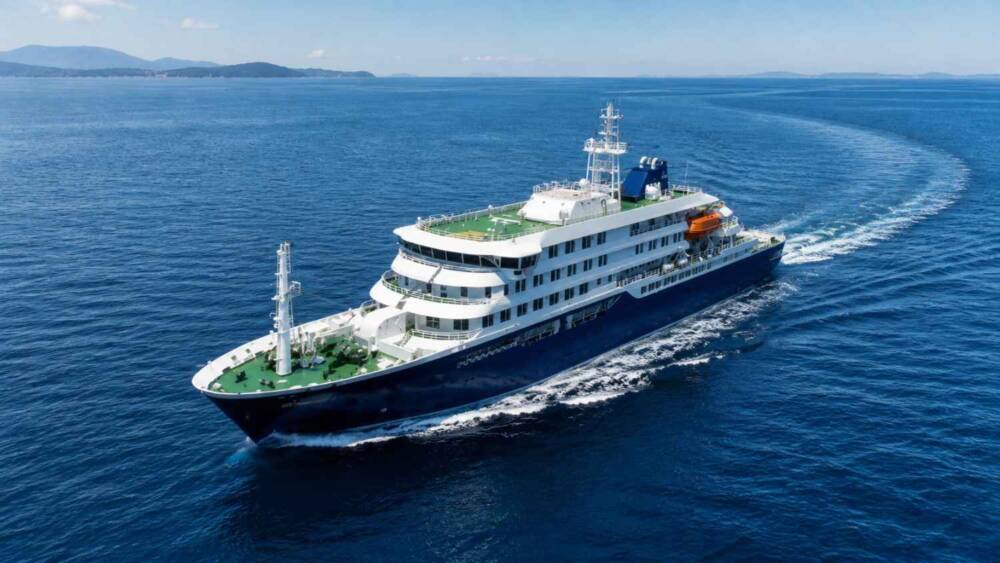
The outbreak occurred on the MV Hondius, a Dutch-flagged vessel operated by Oceanwide Expeditions, which left Ushuaia, Argentina, approximately seven weeks ago.
Before anchoring off in Praia, the capital of Cape Verde, it stopped in Antarctica and the British overseas territory of Saint Helena. From there, the ship would sail to Las Palmas or Tenerife, as per Reuters.
The unfortunate development raises urgent questions that every traveller booking an expedition cruise would need to consider.
What happened on board
The first victim was a 70-year-old Dutch man who fell ill with fever, headache, abdominal pain and diarrhea. He passed away on April 11. His 69-year-old wife collapsed at a South African airport while trying to fly home to the Netherlands and breathed her last at a nearby hospital.
Thereafter, a British national fell sick on April 27 and is now in critical condition at a private medical facility in Johannesburg. Reports say that he is the only laboratory-confirmed case of hantavirus so far. This was followed by the death of a German national on May 2, though his cause of death has not yet been established.
Two crew members, one British and one Dutch, are currently experiencing acute respiratory symptoms requiring urgent care. Cape Verde’s authorities have refused to allow passengers to disembark, citing public health concerns.
Travel vlogger Jake Rosmarin, who is among those trapped on board, posted a raw video from the ship on Monday. “What’s happening right now is very real for all of us here. We’re not just a story. We’re not just headlines,” he said, his voice cracking. “We’re people, people with families, with lives, with people waiting for us at home. There’s a lot of uncertainty, and that’s the hardest part.”
What is Hantavirus, and how dangerous is it?
Hantavirus is a family of viruses affecting the lungs and kidneys. It is typically transmitted by contact with the urine, droppings or saliva of infected rodents.
According to the CDC (US Centers for Disease Control and Prevention), this can cause hantavirus pulmonary syndrome, a severe respiratory illness with a fatality rate of approximately 38% in those who develop breathing symptoms.
When it attacks the kidneys, it’s hemorrhagic fever with renal syndrome (HFRS). It has a lower fatality rate. There is no cure, only treatment of symptoms.
The CDC has been tracking it since the 1993 outbreak in the Four Corners region, which extended well into 1994.
Its other variant, the Andes virus, primarily found in Chile and Argentina, is known to spread between people, though only rarely. The WHO’s regional director for Europe, Hans Kluge, stated clearly: “There is no need for panic or travel restrictions.”
What makes this outbreak medically significant, however, is the setting. Dr. Scott Miscovich, President and CEO of Premier Medical Group, told CNN he initially thought the reports were a misprint.
But as the news poured in, he gave two plausible explanations: the ship became contaminated by rodent droppings or urine, or a passenger contracted the Andes variant in Argentina, where the voyage originated.
What the WHO and authorities are doing
The WHO has notified global health authorities under the International Health Regulations and is coordinating emergency medical evacuations for symptomatic passengers. Though it has also assured that the threat to the wider public remains low.
Dutch authorities have agreed to repatriate affected individuals and at least one body to the Netherlands, pending Cape Verde’s approval.
Oceanwide Expeditions said its priority is ensuring that the two symptomatic crew members on board receive expedited medical care. Detailed laboratory testing and epidemiological investigations are ongoing, the WHO confirmed.
For Canadians booked on expedition cruises to South America, Antarctica or remote Atlantic routes, this is a story worth monitoring closely. It’s a reminder that remote itineraries carry health risks, which can throw up surprises.
It also underscores the importance of travel insurance, which is no longer optional but essential.
Related Post:
About the Author