



“From the Ed Sullivan Theater in New York City, it’s Stephen Colbert!”
We’ll hear those words for the last time tonight.
After 11 seasons, the curtains are closing on The Late Show with Stephen Colbert, marking the end of an era shaped by his opening monologues, celebrity interviews and political satire.
Colbert told audiences last July that CBS was axing the show at the end of his contract. At the time, Paramount and CBS executives said the cancellation was “purely a financial decision against a challenging backdrop in late night” and wasn’t related to the show’s performance or content.
However, the announcement came just two days after Colbert spoke out against Paramount Global, CBS’s parent company, settling a lawsuit with U.S. President Donald Trump over a 60 Minutes story.
Industry watchers suggest the loss of Colbert’s voice will leave a big gap in the late night lineup, but they also note that the format needs to change to survive in the streaming era — a transformation that may already be underway.
Questions are swirling over whether the cancellation of Stephen Colbert’s Late Show was politically motivated or purely financial. Colbert alluded to a ‘bribe’ tied to a Trump lawsuit and a corporate deal.
Holding up a mirror to American society
When Colbert took over the Late Show from a retiring David Letterman in 2015, he proved to be a sharp addition to the late night landscape, thanks in part to his improv background and experience in the satirical trenches on The Daily Show and The Colbert Report.
“There’s not many performers out there who have his track record for holding up a mirror to American society and the political establishment and the media establishment,” said Eric Deggans, critic at large for NPR.
“That the show has to end not on Stephen Colbert’s terms but because of a business deal is, you know, ultimately really disappointing.”
Deggans points to a pattern of attempts by the Trump administration to leverage their power to either “silence or cripple critics, people who’ve spoken out, often in joking terms, about what they’re doing.”
Last fall, ABC briefly took Jimmy Kimmel’s late night talk show off the air following criticism of his comments about the assassination of conservative activist Charlie Kirk. And more recently, Trump himself suggested ABC should fire Kimmel after he joked about Melania Trump being an “expectant widow.”

“The truth is that pop culture and satire in particular are a great way of distilling really effective criticisms of politicians,” Deggans said.
“That’s why so many politicians are so uncomfortable with really good satirists.”
What does this mean for late night’s future?
When Colbert broke the news that his show was being cancelled, he didn’t sugarcoat it.
“I’m not being replaced. This is all just going away,” he said at the time.
And it’s true. It’s the end of an era. There’s no new host and no more Late Show. Byron Allen’s Comics Unleashed will fill the coveted 11:35 p.m. slot at the network.
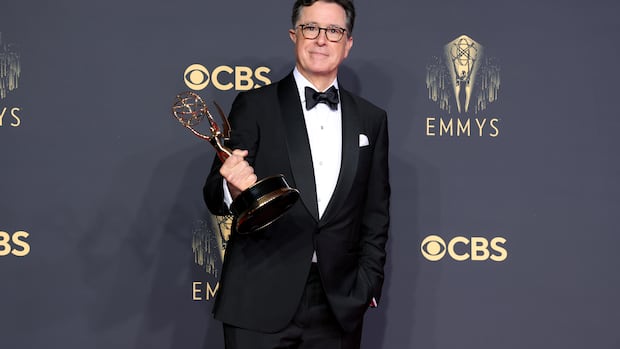
CBS is cancelling The Late Show with Stephen Colbert after 33 years on air. Host Stephen Colbert made the announcement to the audience at a taping on Thursday, just days after he spoke out against Paramount Global, the parent company of CBS.
But Deggans says Colbert’s exit may not be just another sign of a dying format. Instead, he suggests it might actually bolster late night.
“Comics Unleashed, a show that is very pointedly not political and not topical,” he said. “So those viewers either will stop watching broadcast TV in that slot or they will migrate somewhere else.”
And that could mean a boost for Kimmel at ABC or NBC’s Late Night with Jimmy Fallon.
The pivot
But in the long term, experts say the format likely needs to pivot a bit.
As people continue to abandon traditional TV for streaming, fans are increasingly getting their late night fix on the small screens that fit in their pockets, watching viral clips from late night shows on social media, rather than tuning in for the entire show.
And celebrity interviews, normally the cornerstone of any late night talk show, have grown increasingly popular in the podcast world, with shows like Amy Poehler’s Good Hang taking home the inaugural award for best podcast at this year’s Golden Globes.
Even late night hosts themselves have embraced this format. During the writer’s strike in 2023, Colbert, Kimmel, Fallon, Seth Meyers and John Oliver joined forces for a podcast called Strike Force Five.

A genre ahead of its time?
Late night shows are already perfectly positioned to dominate in an era where everybody watches TV on their phones, argues Robert Thompson, trustee professor for television, radio and film at Syracuse University.
Late night, he says, “was a genre designed for TikTok decades and decades before TikTok even existed. Completely modular, you can chop it up.”
In other words, because the format is built on segments and sketches, it’s easy to, well, segment.
Sophia A. McClennen, professor of international affairs and comparative literature at Penn State University, points out that this is already happening, as more and more people are catching clips from late night shows on their phones the next day.
“We’re already seeing it morphing,” she said. “The majority of people do not watch television when it’s broadcast. They just don’t — that habit [has] changed.”
Each late night show already has a presence on social media. Colbert’s, for instance, boasts more than four million followers on TikTok and over 10 million subscribers on Youtube.
But Deggans says that creates a troubling economic reality for the late night space.
“I think these shows are going to have to figure out new sources of revenue or new ways of reaching viewers beyond just taking their content and throwing it on YouTube and letting Google make most of that money.”
And, as McClennen notes, the economic realities of TV production mean late night shows can ill afford to leave money on the table.
“These shows are relatively expensive to produce,” she said. “There’s a lot that goes into them, particularly even in terms of getting those live audiences in those spaces.”
Deggans says that however late night evolves, he hopes the next generation figures out how to preserve the format’s satirical voice and reconfigure it “in a way that makes money for the networks or whoever decides to put these shows on.”
Two Blocks from the White House29:25What Stephen Colbert’s cancellation says about Trump’s America
The final episode of The Late Show with Stephen Colbert airs this week. It’s being called the end of an era, and some critics say the cancellation of the iconic late night talk show represents a broader attack on dissent during Donald Trump’s second administration. This week Washington correspondents Katie Simpson, Paul Hunter and Willy Lowry ask: What, if anything, does Colbert’s cancellation say about the state of free speech in Trump’s America?
Late night an important part of ‘civic health’
Though the format will inevitably adapt and migrate, just as radio once migrated to television and television migrated to streaming, Thompson says the material itself is more relevant than ever.
“The messages that are being delivered and the comic style that late night television has been so expert at putting together … I don’t think that’s going to go away,” he said. “I think it’s just going to have to find a new delivery system.”
Thompson says the format has evolved into something far more vital than entertainment, which is top of mind ahead of Colbert’s last show.
“We’re not just gonna be losing an amusing way to end the evening,” Thompson said. “These programs have become, since the turn of the century, an important part of the civic health of this nation.”
